- info@moretec-inc.com
- |
- CN
- |
- JP
Dealing with leaks, particle contamination, or premature seal failure in your rotating vacuum systems? These issues disrupt clean processes and drive up downtime costs.
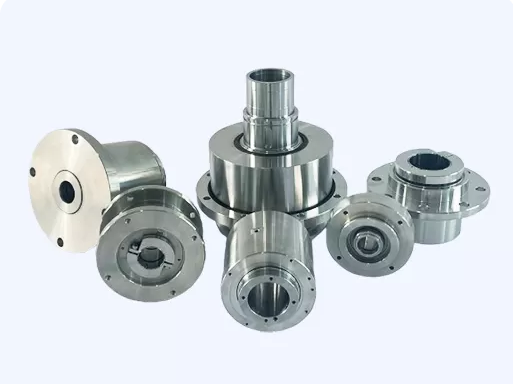
Ferrofluid feedthroughs provide hermetic, zero-leakage rotary seals using magnetically confined ferrofluid liquid O-rings, ideal for high-vacuum and ultra-clean environments. They enable smooth, high-speed rotation without wear particles or vapor backstreaming, supporting semiconductor, thin-film, and optical coating applications.
In precision manufacturing, reliable rotary motion under vacuum is non-negotiable—ferrofluid technology delivers the contamination-free performance that mechanical seals simply can't match.
Losing yield to leaks or contamination from traditional rotary seals in vacuum chambers? Conventional lip seals, O-rings, or bellows often introduce particles, limit speed, or fail under continuous rotation.
Key challenges include maintaining hermetic integrity during high-speed rotation, preventing particle generation, managing heat and torque without drag, and avoiding vapor backstreaming in ultra-clean processes. Traditional seals wear quickly, introduce contaminants, and struggle with UHV levels below 10⁻⁸ Torr.
Rotating motion across vacuum boundaries demands a seal that withstands dynamic conditions without compromising chamber purity. Mechanical contact seals generate particulates and wear debris, risking wafer defects in semiconductors. Bellows limit rotation range and speed, while labyrinth seals allow leakage. High RPMs cause frictional heat buildup, degrading lubricants or fluids. Reactive gases can attack seal materials, and static-to-dynamic transitions often cause initial leaks. These pain points reduce uptime, increase maintenance, and lower overall equipment effectiveness in global clean manufacturing.
Contamination Risk — Wear particles from contact seals contaminate sensitive substrates
Leakage & Vacuum Integrity — Hard to achieve <10⁻⁹ std cc/sec He leak rates dynamically
Speed & Torque Limits — Friction increases drag, heat, and power consumption
Maintenance & Lifespan — Frequent replacements disrupt production schedules
Environmental Compatibility — Reactive process gases degrade standard seals
Frustrated by unreliable seals that compromise your process purity and throughput? Standard solutions fall short in demanding vacuum rotation.
Ferrofluid feedthroughs use magnetically held ferrofluid to form multiple liquid O-rings around the shaft, creating non-contact, hermetic seals with zero leakage, no wear particles, high-speed capability (>10,000 RPM), and excellent chemical stability. This eliminates friction-related issues and supports UHV performance.
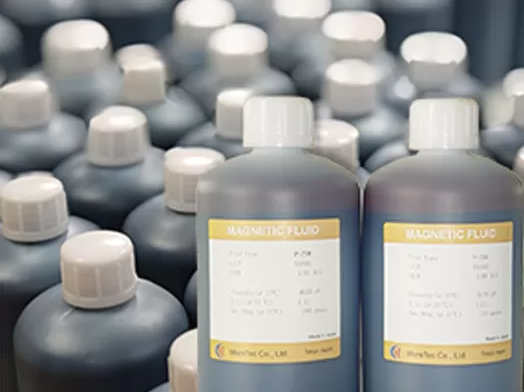
The core innovation: ferrofluid—a suspension of magnetic nanoparticles in low-vapor-pressure carrier liquid—responds to a permanent magnet's field, forming stable liquid barriers in radial gaps. Multiple stages trap pressure differentials, ensuring hermetic sealing statically and dynamically. No solid contact means virtually no wear, minimal torque drag, and particle-free operation. Specialized fluids (hydrocarbon, ester, fluorocarbon) handle reactive gases without degradation. Bearings handle mechanical loads separately, while water-cooling options manage heat in high-duty cycles. Result: longer life, higher reliability, and cleaner processes than alternatives.
| Challenge | Ferrofluid Solution | Benefit |
|---|---|---|
| Particle Contamination | Non-contact liquid seal | Zero wear debris; ideal for cleanrooms |
| Leakage | Multi-stage ferrofluid O-rings | <1×10⁻⁹ std cc/sec He; UHV compatible |
| Speed Limitations | Low-viscosity fluid & optimized magnetism | Smooth rotation up to 10,000+ RPM |
| Heat & Torque | Reduced drag; optional cooling | Lower power use; extended bearing life |
| Chemical Compatibility | Perfluorinated fluids for reactive gases | Stable in etching/deposition environments |
Ferrofluid feedthroughs dominate in semiconductor wafer processing, thin-film deposition (PVD/CVD), optical coating, flat-panel display (FPD) production, etching systems, ion beam processes, and solar/photovoltaic manufacturing. They enable precise, contamination-free rotation globally.
Semiconductor fabs rely on them for rotary stages, platens, and transfer robots where particle control is critical. Thin-film and optical coating systems use large hollow shafts for web rollers or substrate spinning. FPD lines integrate them in high-volume panel handling. Ion beam etching/deposition benefits from smooth, high-torque motion. Emerging solar and LED sectors adopt them for cost-effective, reliable scaling. Their hermetic performance supports yields in Asia's high-volume hubs, North America's research tools, and Europe's precision optics—driving efficiency worldwide.
Semiconductor — Wafer stages, etching, deposition chambers
Thin-Film & Optical Coating — High-speed/large-diameter rollers, planetaries
Flat-Panel Display — Web handling, transport systems
Solar/Photovoltaics — Vacuum coating for cells
Research & Advanced Manufacturing — Sample manipulation, beam control
Questioning if upgrading to ferrofluid seals justifies the investment? Initial costs concern many, but long-term gains prove compelling.
Case examples show superior ROI through reduced downtime, higher yields, extended service life (millions of revolutions), and lower maintenance in semiconductor, coating, and FPD systems. Payback often occurs within 6–18 months via improved throughput and reduced scrap.
In semiconductor PVD tools, ferrofluid feedthrough cuts particle-related defects by >50%, boosting yield and saving thousands per wafer batch. Thin-film optical coaters report 3x longer intervals between rebuilds versus mechanical seals, slashing maintenance costs. FPD web coaters achieve higher line speeds without contamination, increasing output by 20–30%. Real-world deployments (e.g., millions of units in field) demonstrate reduced torque variability and fluid stability improvements, minimizing failures in aggressive environments. Critical thinking: ROI shines where contamination costs exceed seal price—common in high-value processes.
Semicon Deposition — Yield gains from zero particles; payback <1 year
Optical Coating — Extended life in high-RPM setups; lower rebuild frequency
FPD Production — Throughput increase via reliable high-speed rotation
Risking production delays with unproven or intermediary suppliers? Poor support leads to mismatched specs or slow repairs.
Direct partnership with experienced manufacturers like Moretec ensures custom designs, proprietary ferrofluid optimization, expert application guidance, rapid prototyping, and global repair services. This delivers peak performance and minimized risk.
Top suppliers control ferrofluid production for tailored viscosity, thermal stability, and gas compatibility—critical differentiators. They offer millions of proven units, from standard to complex multi-motion integrations. Direct collaboration accelerates customization for OEM needs, reduces lead times, and provides failure analysis/root-cause support. In high-stakes manufacturing, reliable supply chains and aftermarket service prevent costly downtime—making partnership essential over generic sourcing.
Moretec Ferrofluid feedthroughs overcome vacuum rotary sealing challenges with clean, reliable performance—maximizing ROI across semiconductor, coating, and advanced manufacturing environments.