- info@moretec-inc.com
- |
- CN
- |
- JP

Our pricing reflects a quality first manufacturing approach and a fully controlled production process.
In tooling design, we use high precision components such as MISUMI guide pillars and optimized die structures, which improve tooling life by 40%.
For raw materials, we apply triple inspection, including supplier inspection, incoming inspection, and pre production verification.
During manufacturing, production is managed in accordance with ISO 9000 quality management standards.
For final inspection, automatic vision measuring equipment is used to verify dimensional and appearance quality.
This rigorous quality control system ensures stable performance, high consistency, and an excellent record of zero customer complaints.
We ensure ovality accuracy through an integrated precision control system.
Our stamping equipment meets JIS Class 1 precision standards.
Our CNC weaving equipment keeps tension fluctuation below 0.05 N.
Tooling clearance is controlled within 0.1 mm.
In addition, equipment inspection follows a three stage control procedure covering machine startup, in process operation, and maintenance checks.
According to customer acceptance data from the past 12 months, the ovality qualification rate has reached 99.97%.
We control surface cleanliness and appearance quality through a combination of operator management, equipment control, automated inspection, and traceability.
Operators wear anti static gloves during handling.
The equipment is fitted with oil collection boxes, with an oil recovery efficiency of 98.6%.
Inspection is supported by our self developed automatic defect recognition system.
For quality assurance, retained samples and traceability records are kept for every batch, and the appearance defect rate is controlled at 0.04%.
We implement strict die life cycle management throughout production.
Before production begins, the first five stamped pieces are measured and recorded after machine startup. Only qualified parts are released for mass production.
During production, routine inspections are carried out and recorded every four hours.
During maintenance, die usage frequency is recorded daily, and preventive maintenance is performed according to the defined maintenance schedule.
This management approach helps ensure stable edge quality and effective burr control.
We use a dual closed loop control system that combines intelligent monitoring with manual verification.
The intelligent system includes a Mitutoyo online thickness gauge with a resolution of 0.001 mm and automatic measurement every 240 seconds.
For manual assurance, samples are checked every 30 minutes, and paper records are retained for three years.
In addition, the rolling rollers are precision reground and restored annually.
Our annual SPC data shows that the thickness CPK value remains consistently above 1.67.
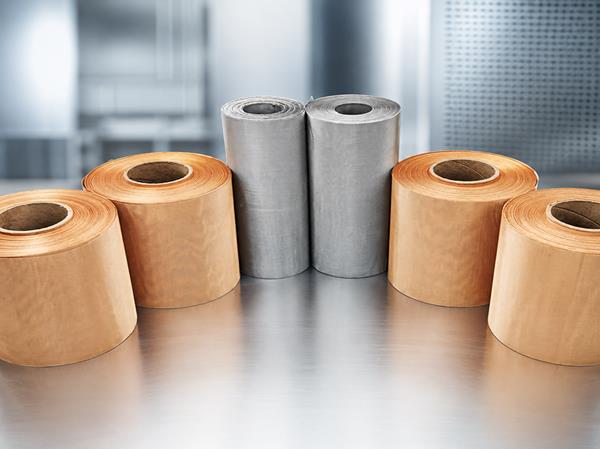
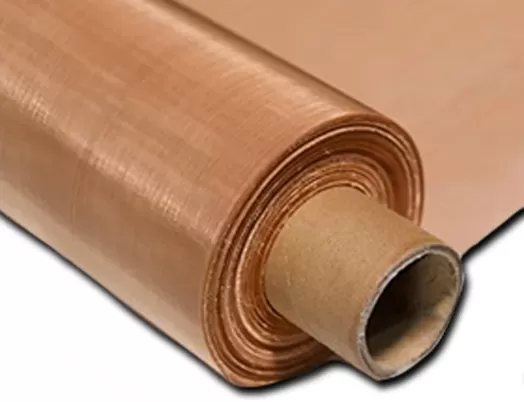
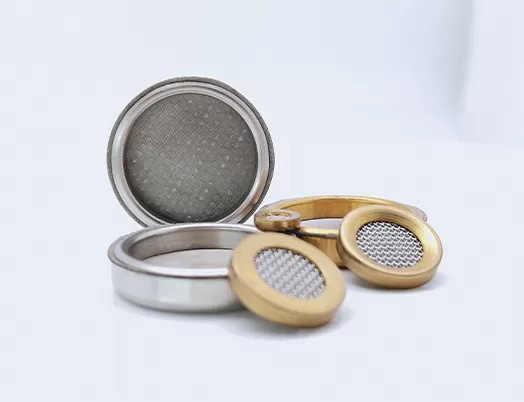
Our precision metal mesh is widely used in medical, food processing, petrochemical, automotive, new energy battery, and electronics applications, especially where reliable filtration, shielding, or fluid control is required.