- info@moretec-inc.com
- |
- CN
- |
- JP

What is the role of ferrofluid rotary vacuum feedthroughs? Learn how to select vacuum feedthroughs for semiconductor manufacturing!
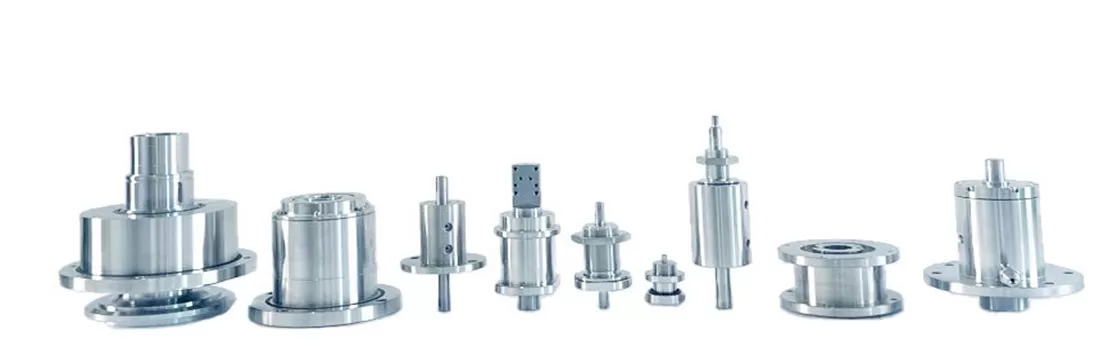
For customers who want to understand vacuum feedthroughs for semiconductor manufacturing equipment, this article will explain the following:
• The principles of ferrofluid rotary vacuum feedthroughs used in semiconductor manufacturing equipment
• The applications of vacuum feedthroughs in semiconductor manufacturing
• How to choose the right vacuum feedthrough
Understand the importance of vacuum feedthroughs.
In semiconductor manufacturing, high-quality product production relies on vacuum feedthroughs. During the manufacturing process, vacuum feedthroughs completely isolate the internal and external environments of chambers, maintaining stable conditions for manufacturing.
This article describes vacuum feedthroughs using magnetic fluid sealing structures. Magnetic fluid is a special liquid that is attracted to magnets. By fixing the magnetic fluid, it effectively vacuum feedthroughs the gap between rotating shafts and fixed parts, isolating the internal and external environments of the chamber.
Vacuum feedthrough is non-contact, meaning it generates minimal friction and wear, resulting in long lifespan. Additionally, it can handle high-speed rotations, making it suitable for a wide range of semiconductor manufacturing equipment. By adjusting the magnetic fluid’s saturation magnetization strength, it can withstand different pressure conditions, offering flexibility.
Vacuum feedthroughs have been widely used in various semiconductor manufacturing equipment, significantly contributing to the production of high-quality semiconductors.
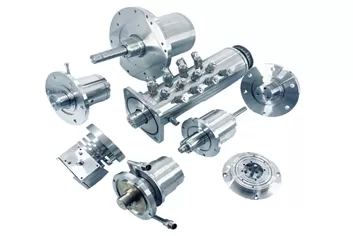
Semiconductor manufacturing requires extremely precise environmental control, and vacuum conditions must be maintained to prevent contamination. Ferrofluid vacuum feedthroughs play an important role in maintaining these vacuum conditions. Below, we explain their specific applications from the process, equipment, and component perspectives:
Vacuum feedthroughs play a crucial role in each stage of semiconductor manufacturing. In the CVD process, vacuum feedthroughs are used to rotate wafers inside process chambers to ensure uniform film formation on the wafer’s surface.
In the PVD process, vacuum feedthroughs maintain the vacuum in the chamber during material deposition.
During etching, vacuum feedthroughs are used in wafer handling robots to prevent contamination from entering the chamber.
In addition, vacuum feedthroughs are used in ion implantation equipment, vacuum heat treatment furnaces, crystal growth furnaces, and various semiconductor devices.
In wafer handling and testing processes, vacuum feedthroughs ensure a high vacuum and clean environment, preventing external contamination and maintaining a stable process environment.
Particularly during wafer handling, vacuum robotic arms are essential, and vacuum feedthroughs are used in the joints to prevent dust from entering the chamber, thereby minimizing the risk of contamination and increasing yield rates.
Additionally, vacuum suction cups used to hold the wafer also use vacuum feedthroughs to ensure stability and prevent damage.
In semiconductor manufacturing, the vacuum chamber is critical for process purity and efficiency. Contaminants or leaks causing a loss of vacuum will negatively impact yield rates. Therefore, the vacuum feedthrough at connection points needs to maintain high performance.
The choice of magnetic fluid for vacuum feedthrough needs to consider vacuum level, temperature, gas environment, and cost. Choosing the right magnetic fluid can improve process stability and yield rates.

The materials and shapes of vacuum feedthroughs vary depending on the manufacturing process type and conditions. When choosing a vacuum feedthrough from leading ferrofluid manufacturer, the following factors need to be considered:
First, clarify the operating environment, including chamber pressure, temperature range, and chemical resistance. Next, consider the shape, size, and sealing performance of the component to be sealed. Additionally, flange or joint types also affect the vacuum feedthrough choice.
By selecting the appropriate magnetic fluid for vacuum feedthrough, high sealing performance can be ensured. Comparing the properties of common sealing magnetic fluids will help choose the most suitable product.
As semiconductor manufacturing equipment continues to evolve, the demand for vacuum feedthroughs is increasing.
Especially with the miniaturization of devices and the increasing demand for clean environments, controlling particle generation is crucial. Vacuum feedthroughs using low vapor pressure fluorinated magnetic fluids are becoming the mainstream choice.
Moreover, temperature resistance is a key area for future development. To maintain stable sealing performance in high-temperature CVD processes, vacuum feedthroughs using high-temperature-resistant fluorinated magnetic fluids are essential.
Additionally, the application of vacuum feedthroughs is expanding beyond semiconductor fields. They are now also used in medical devices, analytical instruments, and other fields requiring vacuum environments.
Thus, vacuum feedthroughs will continue to evolve and play an important role in future technological innovations.
Vacuum technology is essential in semiconductor manufacturing. Vacuum feedthroughs directly impact yield rates and production efficiency. Moretec is a professional manufacturer of ferrofluid, ferrofluidic seals, and ferrofluidic vacuum feedthrough components, offering solutions tailored to customer needs.
Vacuum feedthroughs should be chosen based on the specific applications of equipment. Moretec offers custom design and manufacturing services based on client needs.
With years of experience and practical expertise, we provide optimal fluorinated magnetic fluid sealing solutions and shape and size recommendations.
Moretec emphasizes high-quality products, stable supply, and attentive service. For any questions or requirements related to vacuum feedthroughs, feel free to contact us.