- info@moretec-inc.com
- |
- CN
- |
- JP

Analyzing the applications of rotary vacuum feedthroughs by industry. How to choose the right rotary vacuum feedthrough?
This article explains how to choose the most suitable rotary vacuum feedthrough based on the application. We will cover:
• Industries where rotary vacuum feedthroughs are commonly used
• How to select the most appropriate rotary vacuum feedthrough for each application
• The advantages of implementing rotary vacuum feedthroughs
Let's explore the applications and benefits of rotary vacuum feedthroughs.

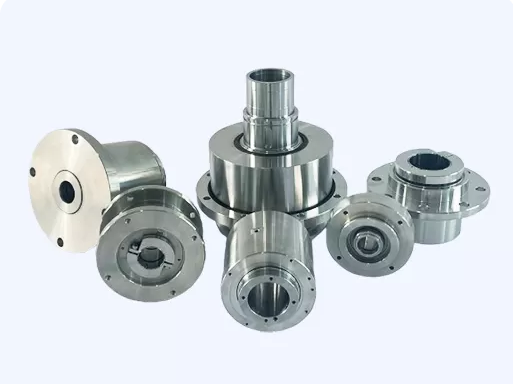
Due to their excellent properties, rotary vacuum feedthroughs are widely used across various industries. For example, because they generate less friction and wear and do not produce small particles, they are ideal for high-vacuum and clean environments. They are essential for equipment that operates in high-vacuum conditions or processes that require highly clean environments.
In semiconductor manufacturing, rotary vacuum feedthroughs are critical for wafer handling while preventing particle generation. In the medical device industry, they are used in devices that require high reliability and safety. Additionally, rotary vacuum feedthroughs play an important role in large display panel manufacturing processes, which demand extremely high sealing performance. Vacuum rotary feedthrough is also key components in aerospace applications, where high performance and reliability are required in extreme environments.
Thus, rotary vacuum feedthroughs have become essential in many industries.
Rotary vacuum feedthroughs can be used in various applications, so selecting the most suitable sealing solution is critical. When choosing the optimal sealing structure, consider the following factors:

Rotary vacuum feedthroughs can be used in both vacuum and pressurized environments. Here's an important breakdown:
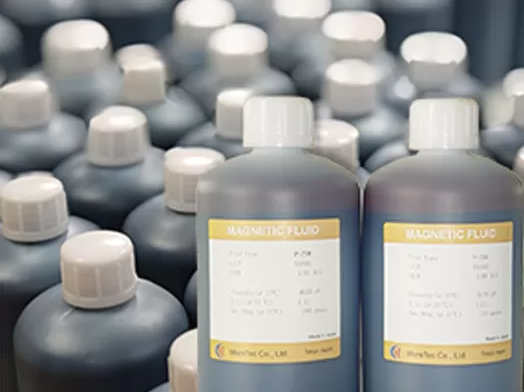
· Vacuum Level: Rotary vacuum feedthroughs can handle ultra-high vacuum conditions. By using magnetic fluids with low vapor pressure, they can maintain high vacuum sealing performance in ultra-high vacuum environments, a key advantage over other sealing methods.
· Pressure Requirements: Rotary vacuum feedthroughs are not limited to vacuum environments; they can also be used in pressurized environments. Selecting a rotary vacuum feedthrough with suitable pressure resistance allows it to withstand various pressure levels.
Because rotary vacuum feedthroughs can adapt to a wide range of pressure conditions, they are used in many applications. When choosing, it’s essential to clarify the required vacuum level and pressure range.
Rotary vacuum feedthroughs are ideal for high-speed rotation applications. The magnetic fluid, placed between the rotating shaft and fixed magnetic poles, creates a liquid seal, thus eliminating solid contact. This design reduces friction, heat, and wear even at high rotational speeds.
In contrast, other seals, such as oil seals and O-rings, experience solid contact, which can lead to excessive friction, heat generation, and wear during high-speed rotation, resulting in shorter lifespans and potential system failure.
Moreover, because ferrofluid is liquid, the frictional resistance is low, allowing for low-torque drives, which contributes to energy savings.

When selecting rotary vacuum feedthroughs, it's crucial to consider the characteristics of the process gases involved. Different gases affect the choice of magnetic fluid and sealing structure.
Failing to take gas characteristics into account can lead to performance degradation, equipment damage, or instability in product quality.
Therefore, understanding the properties of process gases and consulting with professionals to select the most appropriate magnetic fluid and seal structure is vital.
By considering these factors, selecting the most suitable rotary vacuum feedthrough for your application will maximize equipment performance and reliability.
Implementing rotary vacuum feedthroughs brings several key advantages:
• No Particle Generation: Since there’s no solid contact between components, rotary vacuum feedthroughs don’t generate dust or particles, maintaining clean environments.
• Reduced Maintenance Frequency: With no friction or wear, maintenance requirements are greatly reduced, improving equipment uptime and reducing costs.
• Suitable for High-Vacuum and Positive Pressure Environments: Rotary vacuum feedthroughs perform well in both vacuum and pressurized environments, making them versatile for various applications.
Rotary vacuum feedthroughs are particularly suitable for semiconductor manufacturing equipment, vacuum coating devices, and medical equipment that require high cleanliness and high-vacuum environments.
Currently, rotary vacuum feedthroughs from leading ferrofluid manufacturer are widely used in semiconductor, medical devices, vacuum coating, and aerospace industries. In the future, with technological innovations and market expansion, the following areas are expected to see significant growth:
• Higher Performance: Research and development are continuously underway to address extreme environments, including higher vacuum levels, faster rotational speeds, and harsher temperature conditions. New ferrofluids will be developed to enhance lifespan, improve performance, and increase energy efficiency.
• New Application Areas: Rotary vacuum feedthroughs are also expected to expand into fields like space exploration, aviation, robotics, and energy sectors. In particular, in extreme environments, miniaturization, and weight reduction, rotary vacuum feedthroughs will play a crucial role.
Rotary vacuum feedthroughs will continue to evolve and expand across industries as technology progresses.
Vacuum technology is crucial across many industries. Moretec provides rotary vacuum feedthroughs, magnetic fluid seals, and magnetic fluid sealing components, ensuring high-quality products based on advanced technology and extensive experience.
We offer comprehensive solutions from design and manufacturing to sales, tailored to your specific needs. Rotary vacuum feedthroughs, particularly in high-speed rotation applications, provide outstanding "clean, high-vacuum, long-lifetime" performance.
Feel free to contact us for all your rotary vacuum feedthrough needs.