- info@moretec-inc.com
- |
- CN
- |
- JP
For those who want to know about vacuum seals for semiconductor manufacturing equipment, we will explain the following:
Principles of vacuum seals for semiconductor manufacturing equipment.
Use of vacuum seals in semiconductor manufacturing
How to select vacuum seals
Let's understand the importance of vacuum seals together.
In semiconductor manufacturing, one of the indispensable technologies for creating high-quality products is vacuum sealing.
Vacuum sealing maintains a stable manufacturing environment by completely isolating the inside and outside of the chamber while rotating in the process.
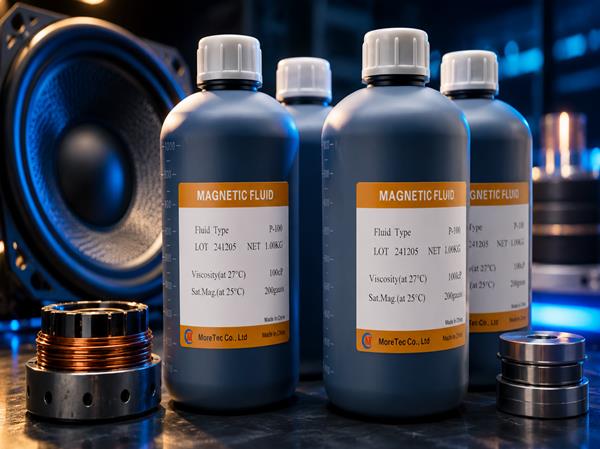
The vacuum seal introduced here is a sealing mechanism that utilizes a magnetic fluid. Magnetic fluid is a special fluid that has the property of being attracted to magnets. By sandwiching the magnetic fluid between the magnets, the gap between the rotating shaft and the fixed portion can be effectively closed, thereby isolating the inside and outside of the chamber.
An important advantage of the magnetic fluid seal is that it is non-contact, which means less friction and wear and a longer life. In addition, it can accommodate high speed rotation, so it can be used in a variety of semiconductor manufacturing equipment. By adjusting the viscosity of the magnetic fluid, it is also flexible enough to cope with different pressure conditions.
Magnetic fluid seals are widely used in a variety of equipment in the semiconductor manufacturing process, and their excellent sealing performance contributes significantly to high-quality semiconductor manufacturing.
Semiconductor manufacturing is a process that requires very precise process control, so a vacuum must be maintained within the manufacturing equipment to prevent the mixing of foreign matter. In order to maintain this vacuum, vacuum seals play a vital role. The following is an explanation of their specific applications from the point of view of the process, peripheral equipment and component parts.
Role in each process such as CVD, PVD, etching, etc.
The role of wafer handling, testing equipment and other peripheral equipment
Sealing of vacuum chambers and piping connections
In semiconductor manufacturing processes, vacuum seals from professional ferrofluid suppliers play an important role in each process. In the CVD (Chemical Vapor Deposition) process, vacuum seals are used to maintain a vacuum in the reaction chamber in order to uniformly form a thin film on the wafer and to rotate the wafer within the chamber.
In the PVD (Physical Vapor Deposition) process, vacuum seals play a similar role and are used to maintain a vacuum inside the vacuum chamber so that the material can be evaporated and deposited onto the substrate to form a thin film.
During the etching process, plasma or chemicals are used to remove unwanted parts, at which point vacuum seals are used in equipment such as wafer handling robots to prevent impurities from entering the cavity.
In addition, high vacuum seals are also widely used in a variety of semiconductor manufacturing equipment such as ion implantation equipment, vacuum heat treatment furnaces, single crystal lifting devices, and testing equipment.
Thus, vacuum seals play an indispensable role in all stages of the semiconductor manufacturing process and contribute to the production of high-quality semiconductors.
Vacuum seals also play an important role in a variety of processes such as wafer handling and inspection during semiconductor manufacturing. These processes need to be carried out in high-precision and clean environments, and it is vital that vacuum seals prevent external contamination and maintain a stable process environment.
In particular, vacuum robots are indispensable equipment for wafer handling processes. Vacuum robots use vacuum seals on their joint parts to prevent them from introducing dust into the chamber during operation. This minimizes the risk of wafer contamination and improves yields.
In addition, vacuum chucks, which are used to hold wafers in place, also use vacuum seals in their adsorption mechanism. Vacuum chucks ensure that wafers are held reliably without damage, guaranteeing stability during handling and inspection.
In semiconductor manufacturing, the vacuum chamber is an important element that directly affects the purity and efficiency of the process. The mixing of minute dust or foreign matter, as well as a decrease in vacuum due to leakage, can negatively affect yield. Therefore, connection parts need to have high-performance seals.
When selecting sealing materials, a number of factors such as vacuum level, temperature, gas environment, and cost need to be considered. By choosing the right sealing material, the stability of the process can be improved, which in turn improves the yield.
The appropriate material and shape of a vacuum seal depends on the type and conditions of the semiconductor manufacturing process. To select the appropriate seal, the following factors must be considered.
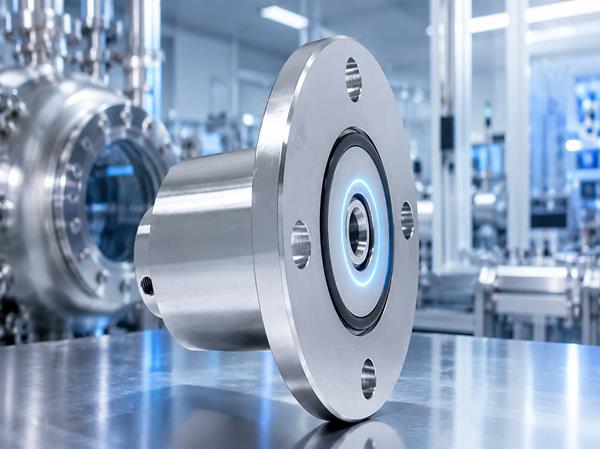
First, clearly understand the operating environment, including the pressure and temperature range inside the vacuum chamber and resistance to chemicals used in the process. Next, consider the shape and size of the object to be sealed and the sealing performance required. The type of flange or fitting will also influence the selection of the seal. Selecting an appropriate seal material and flange combination will ensure high sealing performance.
The evolution of semiconductor manufacturing equipment continues to advance, and at the same time, the requirements for vacuum seals are increasing.
In particular, with the progress of microfabrication, a cleaner environment is required, and the suppression of particulate matter has become an important issue. To meet this need, vacuum seals using fluorine-based oils with low vapor pressure as magnetic fluids have become mainstream.
In addition, coping with high-temperature environments is an important point for future development. In order to maintain stable sealing performance in high-temperature environments such as the CVD process, the development of high-temperature-resistant magnetic fluids is advancing.
In addition, vacuum sealing applications are expanding beyond semiconductor manufacturing. High-performance vacuum seals will be in demand in a variety of fields that require vacuum environments, such as medical equipment and analytical instruments. This suggests that vacuum seals will play an important role in future technological innovation.
Vacuum technology is an indispensable element in semiconductor manufacturing, and high-quality vacuum seals are directly related to improved yield rates and productivity. MORETEC CO., LTD. is a company specializing in the development, manufacture, and sales of magnetic seals, magnetic fluid seals, vacuum seals, and other vacuum feedthroughs products. We provide our customers with the best vacuum sealing solutions tailored to their needs.
Vacuum seals require the selection of the right type for different applications in semiconductor manufacturing equipment. MORETEC CO., LTD. is able to provide design and manufacturing services according to the needs of our customers.
Based on our many years of experience and track record, we will advise our customers on the most suitable seal material, shape and size. We are also able to customize designs to meet the specific requirements of our customers' equipment for special applications.
MORETEC CO., LTD. is always committed to providing high quality products, stable supply and attentive customer service. If you have any problems with vacuum seals, please feel free to contact us.