- info@moretec-inc.com
- |
- CN
- |
- JP


Choose the right Ferrofluid seal for your needs! Explaining the role of Ferrofluid seal in vacuum environments.
When using Ferrofluid seal, it's crucial to choose the appropriate type. This article will explain:
• Why Ferrofluid seal is indispensable in vacuum environments
• How to select the right Ferrofluid seal for vacuum applications
• Ferrofluid seal's durability in vacuum environments
Please select the appropriate Ferrofluid seal based on your specific requirements.

Ferrofluid seal is primarily used in vacuum environments. This section explains the definition of a vacuum and the role of Ferrofluid seal.
A vacuum refers to a state where the number of gas molecules in a space is extremely low. Absolute zero is practically impossible, so a state with pressure lower than atmospheric pressure is generally referred to as a vacuum. The required vacuum level varies based on the specific application.
Vacuum environments are used in many fields, including vacuum packaging to prevent food oxidation, electronic component manufacturing to prevent reactions with oxygen or moisture in the air, and in semiconductor manufacturing, which relies heavily on vacuum technology. Other applications include vacuum thermos bottles to improve insulation.

Ferrofluid seal Solution
In electronic components or semiconductor manufacturing equipment, it's essential to completely seal the gap between rotating shafts and stationary parts to maintain the vacuum environment. However, contact seals can result in friction, wear, and vaporization.
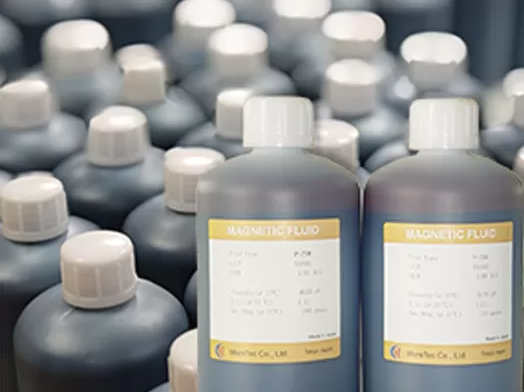
Ferrofluid seal uses a special liquid — magnetic fluid — to create a non-contact seal under the influence of magnetic forces, solving this issue.
Magnetic fluids are liquids that don't produce friction or wear and minimize vaporization. Additionally, by adjusting the magnetic force, it can handle different pressure differentials, ensuring high-performance sealing even in high-pressure environments.
Thus, Ferrofluid seal is the best solution for sealing rotating shafts in vacuum environments and is indispensable in achieving a high-purity, reliable vacuum environment.
When selecting Ferrofluid seal for vacuum devices, factors such as load conditions, process gases, pressure differential, vacuum level, rotational speed, torque, and temperature need to be considered. Choosing the right Ferrofluid seal from professional ferrofluid manufacturer for each factor can improve device performance and ensure stable operation.
Load Conditions
The ability to withstand load is crucial when selecting Ferrofluid seal. During the design phase, expected radial and axial loads, off-center loads, and other external forces need to be assessed, and the bearing lifespan should be calculated to select a matching Ferrofluid seal.
Increased load reduces bearing dynamic life, especially offset loads, which significantly impact lifespan. Thus, the relationship between load factors and bearing lifespan must be understood to select a product that meets load-bearing requirements for system reliability and long-term stable operation.
Vacuum Level and Achievable Pressure
When selecting Ferrofluid seal, the required vacuum level and pressure must be considered. Ferrofluid seal has performance data indicating the achievable vacuum level and pressure. Generally, as vacuum level increases, pressure decreases, and exhaust speed slows. Conversely, low vacuum levels have higher pressure and faster exhaust speeds. It's essential to understand these relationships to ensure the product meets the required vacuum level and pressure.
Rotational Speed and Torque
For vacuum applications, Ferrofluid seal needs to adapt to rotational speed and torque. Ferrofluid seal is used in high-speed rotating shafts, requiring resistance to high speeds while withstanding the torque transferred to the shaft.
The maximum rotational speed, rated speed, permissible torque, and starting torque differ across different Ferrofluid seal models, depending on the type of magnetic fluid, bearing load, and materials used.
The appropriate Ferrofluid seal should be selected based on these values and the actual operating environment.
Temperature Environment
Ferrofluid seal must adapt to temperature variations in the environment. Temperature changes affect the viscosity and magnetic properties of the fluid, which in turn affects sealing performance.
High temperatures reduce viscosity, while low temperatures increase it. Extreme temperatures may cause freezing or evaporation, causing the fluid to lose its sealing function.
To prevent evaporation in high-temperature environments, cooling systems or high-temperature resistant magnetic fluids can be used. In low-temperature environments, heating systems or fluids with good low-temperature properties can be employed.
With proper selection and maintenance, Moretec's ferrofluid seal can maintain stable performance for an extended period. Factors influencing its lifespan include the degradation of the magnetic fluid, material selection, and the operating environment.
Moretec Magnetic fluid degradation can occur due to high temperatures or corrosive gases, and the service life is significantly influenced by the conditions in which it is used. Material selection, such as using corrosion-resistant materials in corrosive gas environments, is crucial to prevent seal damage.
Operating environments also affect longevity, with high rotational speeds reducing bearing lifespan. External magnetic fields may also decrease sealing performance. Regular maintenance is essential, including replacing magnetic fluid and inspecting seals, to extend lifespan and maintain performance.