- info@moretec-inc.com
- |
- CN
- |
- JP
Struggling with leaks, contamination, or unreliable rotation in your high-vacuum setup? Choosing the wrong ferrofluid feedthrough can halt production and inflate costs fast.
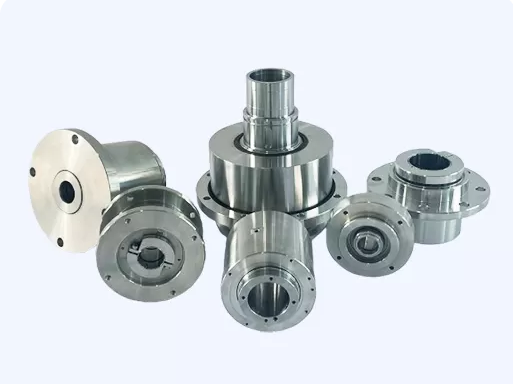
To select the right ferrofluid feedthrough, evaluate your vacuum level (e.g., high to ultra-high), rotational speed, torque needs, operating temperature, shaft type (solid/hollow), flange compatibility, and environmental factors like reactive gases. Match these to specifications like leak rates below 1×10⁻⁹ std cc/sec He, then consult manufacturers for optimal performance and longevity.
Selecting the ideal ferrofluid feedthrough isn't just about specs—it's about ensuring seamless integration that prevents downtime and maintains process purity in demanding vacuum environments.
Facing downtime from unreliable rotary seals in thin-film or semiconductor processes? Traditional seals often fail under high-speed or contamination-sensitive conditions.
Ferrofluid feedthroughs excel in semiconductor wafer processing, thin-film deposition (PVD/CVD), optical coating, flat-panel display (FPD) manufacturing, etching systems, and substrate handling. They enable precise, contamination-free rotation for platens, rollers, rotary stages, and planetaries.
These feedthroughs shine where zero leakage, high RPM capability, and non-contaminating operation are critical. In semiconductor fabs, they support rotary motion for wafer stages and beam steering without introducing particles or vapors. Optical coating lines benefit from large-diameter hollow shafts for fiber optic filters, while FPD production relies on them for web coater rollers and transport systems. Their hermetic sealing (often to 10⁻⁸ Torr or better) protects sensitive processes from atmospheric ingress, boosting yield and reliability across global high-tech manufacturing hubs.
Semiconductor Manufacturing — Rotary stages, platens, etching, deposition chambers
Display (FPD/LCD/LED) — Web handling rollers, transport robots
Optical and Vacuum Coating — High-speed, large hollow shafts for precision coating
Research & General Vacuum — Sample manipulation, beam steering
Wasting budget on mismatched feedthroughs that underperform or fail prematurely? Overlooking critical specs leads to leaks, excessive drag, or shortened lifespan.
Prioritize leak rate (≤1×10⁻⁹ std cc/sec He), vacuum range (down to 10⁻⁹ Torr for UHV), max RPM/torque, operating temperature (typically 0–80°C standard, lower for custom), shaft type/size, flange (CF, KF, ISO), ferrofluid type (hydrocarbon vs. reactive gas/perfluorinated), and bearing lubrication (e.g., Fomblin/Krytox).
Breaking it down ensures your feedthrough matches exact application demands. Start with vacuum level—standard hydrocarbon ferrofluid suits most high-vacuum needs, but reactive gas environments require perfluorinated options for chemical stability.
| Specification | Typical Range/Options | Why It Matters | Consideration Tip |
|---|---|---|---|
| Leak Rate | <1×10⁻⁹ to 1×10⁻¹¹ std cc/sec He | Ensures hermetic integrity | Critical for UHV; verify with He testing |
| Vacuum Level | 10⁻⁷ to 10⁻⁹ Torr | Matches chamber requirements | UHV often needs CF flanges & special fluid |
| Max Rotational Speed | Up to 5000+ RPM | Supports high-throughput processes | Balance with torque & heat generation |
| Torque Capacity | Varies (e.g., 9 oz-in to 160 lbs-in) | Handles load without slippage | Check at target RPM |
| Operating Temperature | 0–80°C (standard); -40°C+ custom | Prevents fluid degradation | Water-cooling for high-speed/heat apps |
| Shaft Type | Solid or Hollow | Hollow for gas/electrical passthrough | Size must fit your spindle/setup |
| Ferrofluid Type | Hydrocarbon, Ester, Fluorocarbon | Compatibility with gases/processes | Reactive gases need perfluorinated |
| Flange/Mounting | CF, KF/NW, ISO, Baseplate | System integration | Match existing chamber ports |
Review load capacity graphs (often at 1000 RPM baseline) and drag torque to avoid over-specifying.
Navigating varying global standards and compliance confusing your procurement? Regional differences in regulations can delay projects or cause compliance issues.
Buyers must consider local vacuum standards, material certifications (e.g., RoHS, REACH in EU), export controls for high-tech components, and regional preferences for flange types or fluid formulations. Semiconductor hubs like Asia emphasize UHV compatibility and reactive gas options.
In North America and Europe, focus on stringent environmental regs (REACH) and UHV performance for research/semicon tools. Asian manufacturing (Taiwan, Korea, China) prioritizes high-volume, cost-effective solutions with fast lead times and custom integrations for FPD/semicon lines. Always verify certifications, supply chain reliability, and after-sales support—global manufacturers often tailor to regional needs like water-cooling prevalence in high-heat Asian fabs.
Standard feedthroughs limiting your machine design or performance? Off-the-shelf options rarely fit unique OEM geometries or demanding specs.
Custom solutions allow tailored shaft sizes, mounting configurations, integrated motors, multi-plane motion, specialized ferrofluids, and optimized torque/RPM for seamless OEM integration.
OEMs in semiconductor equipment or coating systems gain advantages through modified standards or full custom designs—accommodating complex fittings, higher pressures, or intelligent controls. This ensures perfect fit, reduced assembly time, and superior reliability in proprietary systems.
Dealing with intermediaries causing delays, miscommunications, or suboptimal recommendations? Third-party sourcing often lacks deep technical insight.
Direct collaboration provides expert guidance on ferrofluid optimization, rapid customization, proprietary fluid formulations, and ongoing support—ensuring peak performance and shorter lead times.
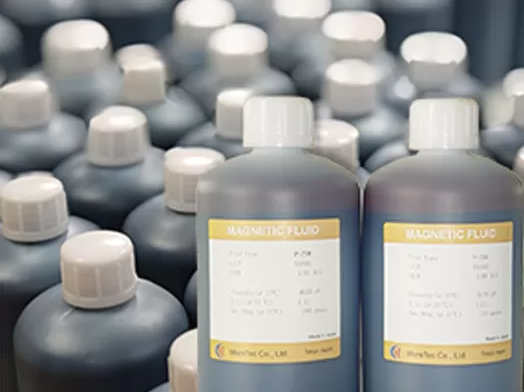
Ferrofluid manufacturer who produce their own ferrofluids (key differentiator) fine-tune viscosity, magnetism, and chemistry to your exact process—vital for reactive gases or extreme conditions. Direct access cuts costs, accelerates prototyping, and delivers reliable global service with millions of units proven in the field.
Selecting the right ferrofluid feedthrough demands careful evaluation of specs, applications, and customization needs—ensuring reliable, contamination-free rotation in your vacuum system.