- info@moretec-inc.com
- |
- CN
- |
- JP
Rotating equipment in vacuum systems requires a seal that can transmit motion while controlling leakage. Ferrofluid seals and mechanical seals solve this problem in different ways. For semiconductor, coating, analytical instrument and industrial vacuum applications, understanding the difference helps engineers choose the right rotary feedthrough solution.
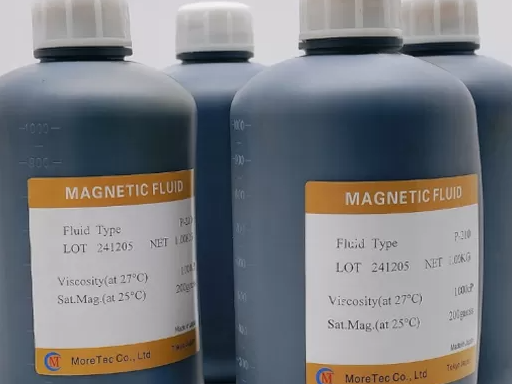
A ferrofluid seal uses magnetic fluid held in place by a magnetic field to create a series of liquid O-ring-like sealing stages around a rotating shaft. The ferrofluid remains in the sealing gap, helping maintain vacuum while allowing smooth rotation.
This design is widely used in vacuum rotary feedthroughs because it can provide low particle generation, low friction and stable sealing performance when correctly selected.
Uses magnetic fluid retained by a magnetic circuit.
Allows rotation while maintaining a pressure differential.
Common in high-vacuum rotary feedthrough applications.
Suitable for processes where clean rotation and low leakage are important.
A mechanical seal uses contacting seal faces, elastomers or other physical sealing components to reduce leakage around a rotating shaft. Mechanical seals are common in pumps, mixers and many industrial machines, especially where liquids or gases are handled at atmospheric or process pressure. For equipment matching, compare the specifications on the custom ferrofluid seals page before confirming specifications.
In vacuum applications, mechanical seals may be limited by friction, wear, particle generation or leakage performance depending on the system requirement.
Uses physical contact or close-clearance components.
Common in pumps and rotating process equipment.
May require lubrication or cooling depending on design.
Wear of contact surfaces can affect service life.

The key difference is the sealing mechanism. A ferrofluid seal can maintain a vacuum barrier without the same type of dry rubbing contact found in many mechanical seals. This can reduce wear and particle concerns in clean vacuum systems.
However, ferrofluid seals must be selected according to shaft size, speed, temperature, pressure differential, process gas compatibility and orientation. Mechanical seals may still be suitable for non-vacuum or lower-demand applications where cost and simplicity are more important. For equipment matching, compare the specifications on the ferrofluid feedthrough page before confirming specifications.
Ferrofluid seal: strong option for clean vacuum rotation.
Mechanical seal: common for broader industrial sealing tasks.
Selection depends on vacuum level, rotation speed, temperature and process environment.
A vacuum rotary feedthrough transfers rotational motion from outside a chamber to equipment inside the vacuum environment. In a ferrofluidic feedthrough, the ferrofluid seal is integrated with shaft, bearings, magnetic circuit and housing. This allows reliable torque transfer while helping maintain chamber vacuum.
Applications include wafer handling, vacuum coating, crystal growth, analytical instruments, glovebox systems and other rotating vacuum equipment.
Solid shaft feedthroughs for direct torque transmission.
Hollow shaft feedthroughs for routing cables, gas or other media depending on design.
Custom feedthroughs for special mounting, speed or temperature requirements.
Engineers should define operating parameters before selecting a seal. A supplier needs shaft diameter, rotational speed, vacuum level, pressure differential, temperature, process gas, torque and mounting interface. Without these details, a model selection may be unreliable.
For critical systems, compatibility and service life should be reviewed early. The wrong seal choice can cause downtime, contamination or vacuum instability.
Vacuum level and pressure differential.
Shaft diameter, speed and torque.
Operating temperature and duty cycle.
Process gas or vapor exposure.
Mounting interface and space limitations.
It is used to seal rotating shafts, especially in vacuum rotary feedthroughs where rotation must pass into a vacuum chamber with low leakage.
It is often better for clean vacuum rotary applications, but mechanical seals may be suitable for other industrial equipment. The best choice depends on operating conditions.
Provide shaft size, speed, vacuum level, pressure differential, temperature, process gas, torque and mounting requirements.
Submit your shaft size, speed, vacuum level and process conditions to receive a ferrofluid seal or vacuum rotary feedthrough selection recommendation.