- info@moretec-inc.com
- |
- CN
- |
- JP
In semiconductor manufacturing, even brief unplanned downtime on a critical vacuum process tool can disrupt wafer output, yield, and cycle time. For this reason, the reliability of vacuum seals is not just a mechanical concern, but a key factor in process stability and operating cost. In applications such as CVD, Etch, and other high vacuum systems, ferrofluid feedthroughs are widely used where hermetic sealing, low particle generation at the sealing interface, and stable rotary transmission are required.
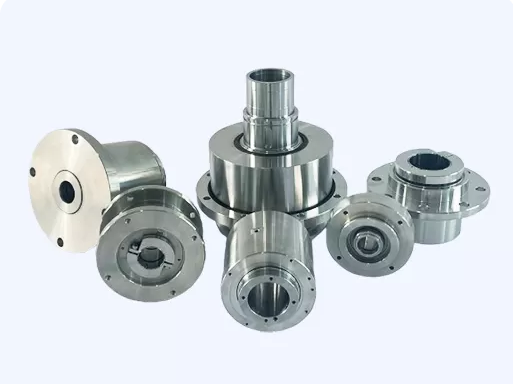
As a Japan headquartered manufacturer of ferrofluid feedthroughs and vacuum rotary seals, Moretec provides standard and custom engineered solutions for semiconductor, vacuum coating, photonics, and other demanding vacuum applications.
At the core of a Moretec ferrofluid feedthrough is a magnetic circuit that retains a specially formulated ferrofluid in the gap between the rotating shaft and the stationary pole pieces. This creates multiple liquid O rings that form a non contact dynamic seal. Unlike conventional contact sealing methods, this design enables hermetic sealing with minimal friction and wear at the sealing interface.
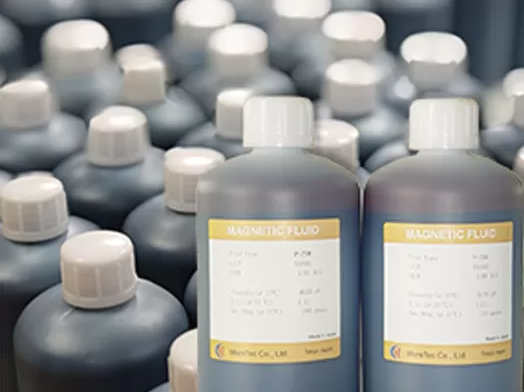
When a magnetic field is applied, the ferrofluid, which is a colloidal suspension of nano scale magnetic particles, is captured in the sealing gap between the shaft and the pole pieces. The resulting series of liquid rings acts as a pressure barrier while allowing smooth rotary motion.
Hermetic Vacuum Sealing
Depending on the design and ferrofluid formulation, Moretec feedthroughs can support vacuum levels down to 10⁻⁹ Torr.
Low Particle Generation at the Sealing Interface
Because the sealing mechanism is non contact, ferrofluid feedthroughs greatly reduce friction related wear and particle generation compared with conventional contact seal designs.
Low Torque and Stable Rotation
Since the sealing medium is a liquid held in place by magnetic force, drag torque is low and rotary motion remains stable. Starting torque and drag torque depend on model selection, operating conditions, and system design.
Reliable Leak Performance
Moretec feedthroughs are helium leak tested before shipment. Published performance levels depend on configuration and application requirements.
High Speed Capability
Depending on model selection, cooling structure, and thermal conditions, Moretec feedthroughs can support rotational speeds from low rpm operation to several thousand rpm.
Engineering for Harsh Process Conditions
Semiconductor processes often involve elevated temperatures, reactive gases, and strict cleanliness requirements. Moretec addresses these challenges through application specific engineering, including material selection, ferrofluid formulation, structural optimization, and thermal management design.
For many applications, stainless steel materials such as SUS304 and SUS316L are used for structural components. In more demanding chemical environments, perfluorinated ferrofluid options and other compatibility focused design measures can be considered according to the actual process gas and temperature conditions.
For elevated temperature applications, water cooled housing designs can be used to help keep the ferrofluid within an appropriate operating range. Allowable temperature depends on the selected ferrofluid, magnetic circuit design, and actual operating environment.
Selecting a high performance ferrofluid feedthrough is not only a sealing decision, but also a system reliability decision. With the right design, manufacturers can improve vacuum stability, reduce contamination risk, lower frictional load, and extend maintenance intervals under suitable operating conditions.
Are you developing a new vacuum system or upgrading an existing rotary seal interface? Moretec supports both hollow shaft and solid shaft custom designs tailored to your vacuum level, speed, torque, load, mounting interface, and environmental requirements.