- info@moretec-inc.com
- |
- CN
- |
- JP
Ferrofluids in speakers are used in the magnetic gap of certain drivers to improve thermal control, damping and performance stability. For speaker manufacturers and repair specialists, choosing the right audio ferrofluid requires attention to viscosity, magnetic properties, temperature performance, driver design and long-term reliability.
In a speaker driver, ferrofluid can be placed in the gap around the voice coil where the magnetic field holds it in position. The fluid helps transfer heat away from the voice coil and can provide damping that affects driver behavior.
This is especially common in tweeters and some specialized drivers where heat management and controlled movement are important. The exact effect depends on the ferrofluid grade and driver design.
Helps conduct heat away from the voice coil.
Provides damping in the magnetic gap.
Can improve power handling and stability when properly selected.
Must match the driver design to avoid performance problems.
Viscosity influences how the ferrofluid behaves in the magnetic gap. A fluid that is too thick may add excessive damping, while a fluid that is too thin may not provide the desired performance or stability. Speaker designers should select viscosity according to the driver type, gap size and acoustic goal. For related product details, review the ferrofluids in speakers page before confirming specifications.
Repair users should avoid replacing ferrofluid with an unknown grade. The wrong fluid can change sound response, reduce efficiency or create reliability issues.
Lower viscosity may reduce damping effect.
Higher viscosity may increase damping and affect response.
Driver gap and voice coil design influence the correct choice.
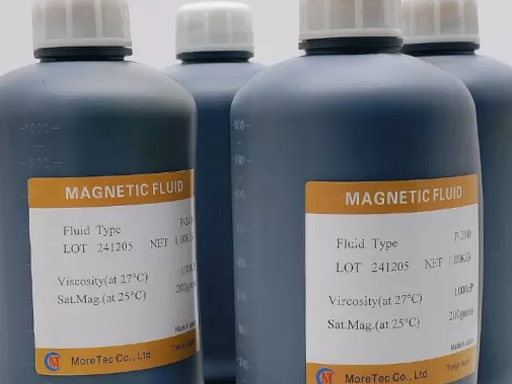
Voice coils generate heat during operation. Audio ferrofluid can help move heat from the coil area to surrounding metal parts, supporting more stable performance under load. This can be important for professional audio, high-power tweeters and compact drivers.
However, ferrofluid is not a universal solution. The driver must be designed to use it correctly, and the selected fluid must remain stable under the expected temperature range. For related product details, review the ferrofluid for speakers page before confirming specifications.
Supports heat transfer in selected speaker designs.
May help reduce thermal compression in some drivers.
Requires proper grade selection for temperature stability.
Speaker manufacturers should select ferrofluid based on acoustic design targets, magnetic gap dimensions, operating temperature and long-term stability. For repair, the safest method is to match the original specification or consult a supplier with audio ferrofluid experience.
Buyers should provide driver type, gap size, application, required viscosity range and expected operating conditions. This allows the supplier to recommend a model more accurately.
Driver type: tweeter, midrange or specialized speaker.
Magnetic gap dimensions and voice coil design.
Target damping and response behavior.
Temperature and power handling requirements.
Original ferrofluid specification if replacing old fluid.
Audio ferrofluid should be stored according to supplier instructions and kept free from contamination. During application, accurate dosing is important because too much or too little fluid can change driver performance.
For production use, manufacturers should standardize dosing tools, inspection methods and storage control to keep speaker performance consistent across batches.
Keep containers sealed when not in use.
Avoid contamination from dust or other fluids.
Use controlled dosing for repeatable results.
Test acoustic performance after application.
It is used to help transfer heat and provide damping in the magnetic gap of certain speaker drivers, especially tweeters and specialized designs.
It may be possible for experienced repair users, but the replacement fluid must match the driver requirement. Wrong viscosity or dosage can affect sound and reliability.
Choose based on driver type, magnetic gap, target damping, temperature requirement and original specification if available.
Share your speaker driver type, gap details, target viscosity or original specification to receive an audio ferrofluid recommendation.